
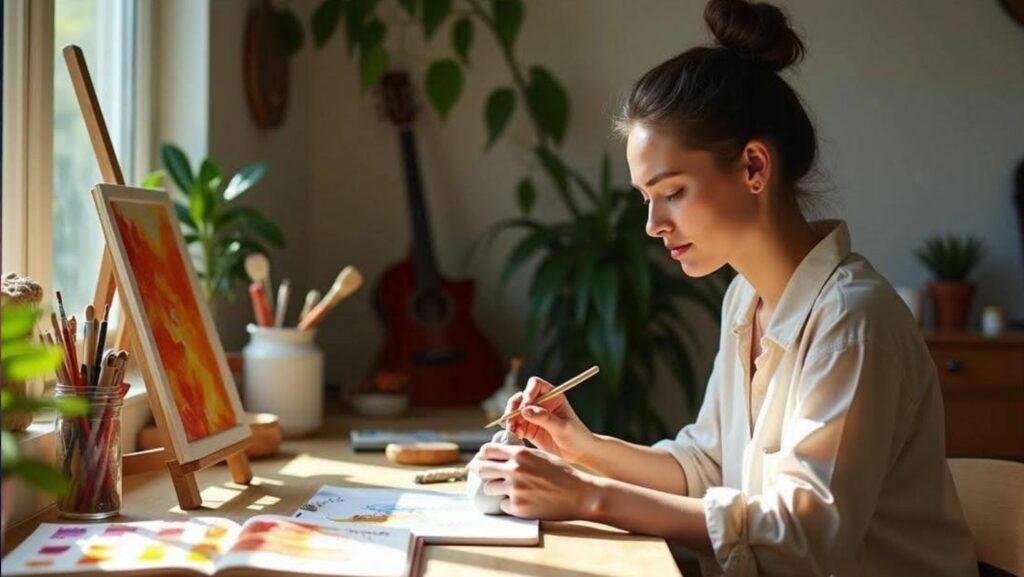
Have you ever noticed how creative self-expression becomes a powerful outlet when words don’t cut it? You might paint, write, dance, or try any artistic medium. This helps you process complex emotions and experiences. Your mental and physical health can improve significantly when you communicate authentically with yourself.
Art lets us access deeper parts of our individuality and intuition. Your creative expression provides a safe space to deal with challenging emotions like grief, anxiety, or anger. The artistic process helps us value our unique gifts and views. But many people don’t try this path because they forget creativity’s power during stressful and uncertain times.
Let me guide you through the hidden links between creativity and personal growth in this piece. You’ll find practical ways to use your creative practice as a path to self-discovery and change.
Creativity as a mirror for self-discovery
Creative self-expression acts like a mirror that shows us who we really are. Art reveals parts of our identity that stay hidden in daily life, unlike regular ways of self-reflection.
How artistic expression reveals your inner self
Art reflects our deepest thoughts and emotions that we often can’t put into words. We bring our internal world outside through visual representation and give shape to feelings that only lived within us before. Creating art lets us voice our deepest thoughts and emotions and helps us connect better with ourselves and others.

Our conscious filters fade away when we create art. You enter a space where self-criticism disappears and authenticity runs wild if you create without judgment. This creative flow reveals parts of yourself you might not even know exist. Many artists say they find patterns in their work that light up unconscious concerns or values they didn’t know they had.
Art-making works as self-therapy too. We learn about our true emotions, hopes, goals, and values through creative work. The process helps us see how our past shapes our present and shows us how perfectionism or self-doubt appears in what we create.
Using creativity to grow over time
Personal transformation through creativity builds up gradually rather than happening instantly. Small creative acts drive us forward meaningfully each day. These don’t need to be monumental—Starting with a paint-by-numbers project is a simple and enjoyable way to develop a consistent creative habit, and you can learn more about this kit to explore your creativity in a fun and stress-free way.
Consistent creative practice will make you more resilient, adaptable, and courageous. Creativity doesn’t just help you make things—it helps you make things happen in your life.
Why the process matters more than the result
The creative trip holds more power to change us than the final product. We build important qualities through the creative process:
- Emotional resilience when facing challenges
- Self-awareness through experimentation and reflection
- Authenticity by connecting with our genuine voice
We often focus only on results, which brings stress, fear, and constant self-judgment. Real creativity disappears when results become everything. As one artist notes, “If painting is just about the success of the resulting work, who is going to determine whether that painting is a success?”
Creating involves thinking, learning, experimenting, and doing – all key parts of personal growth. This happens best when we look at exploration instead of perfection. The creative journey helps us expand our comfort zones, challenge limiting beliefs, and develop more self-acceptance.
Self-discovery through creativity isn’t about mastery or achievement. It’s about using artistic expression as a lifelong conversation with yourself.
Exploring different forms of creative expression
Creative self-expression opens up endless ways to explore your inner world. You can connect with yourself and others through different sensory experiences with each artistic medium.
Visual arts: painting, drawing, sculpture
Visual arts represent one of humanity’s oldest forms of self-expression, dating back to prehistoric cave paintings. You can turn your internal world into something tangible through painting, drawing, or sculpting. These create real representations of your thoughts and emotions. Art becomes a powerful healing tool as you release stored emotions through creating. The physical nature of visual arts helps you move your focus from internal thoughts to what you’re making. The artwork you choose for your space, such as large living room wall art, can help create an environment that encourages you to explore your creativity more freely. This creates a unique experience that makes the rest of the world fade away.
Writing and journaling
Taking pen to paper is a great way to grow personally. Journaling is the quickest way to discover yourself, especially with practices like stream-of-consciousness writing that reveal deeper truths about you. Many people find that reading books on journaling and expressive writing offers helpful techniques and fresh inspiration to deepen their practice. Writing helps many people heal old wounds, work through tough emotions, and see their relationships and purpose clearly. Research shows that writing about difficult experiences can help healing and recovery. This works best when you try to make sense of what happened rather than just expressing feelings.
Music, dance, and performance
These dynamic art forms let you communicate without words. To cite an instance, dance connects your brain, body, and soul. Your movements tap into areas where emotions are stored, which helps you tune into your internal world better. This releases endorphins that reduce depression and boost your mood. Music lets you combine poetry with melody to express who you are, what you believe, and what you’ve experienced.
Digital and multimedia art
Digital creativity has made self-expression possible in new ways through digital painting, phototherapy, and animation. These tools are available for emotional expression without needing traditional art training. Digital art gives many people the freedom to create subtle expressions of feelings, which makes the healing process richer.
Overcoming creative blocks and self-doubt
Creative blocks are inevitable on any artistic path—those moments when inspiration disappears and doubt takes over. Breaking through these barriers starts with understanding them.
Common fears that hold people back
Fear shows up as extreme opposites—being too visible or invisible, failing or achieving too much, or having others steal your ideas or finding out you lack talent. Creative expression needs vulnerability, which makes most people pause. As one expert notes, “Putting yourself out there” awakens deep fears about judgment and criticism.
How to transform into a growth mindset
Studies prove that people with growth mindsets perform better than those with fixed mindsets. Your creativity improves through effort when you:
- Feel excited to gain related knowledge
- Welcome critique and feedback
- Want to solve complex problems
Challenges become opportunities for growth rather than signs of limitation. Your creativity grows stronger through practice, not just natural talent.
Practical tips to stay inspired
Creative blocks signal that your process needs support, not that something’s wrong with you. These approaches can help:
Start with creative resets by switching mediums when stuck. On top of that, working at night helps because lower cortisol levels reduce inhibitions. A solid routine helps you make the most of your limited time.
Turning creative practice into personal transformation
Creative practice holds tremendous power to transform who we are at our core, going beyond mere self-expression. Our identity reshapes gradually as we line up with our deepest beliefs and aspirations.
How creativity builds emotional resilience
Creative expression works as a powerful emotional channel that helps us process complex feelings which might otherwise overwhelm us. Regular creative activities reduce stress, ease symptoms of depression, and improve overall mood. Artistic pursuits help us develop resilience—we learn to bounce back from challenges by adapting to change.

Research shows that creativity encourages positive emotions that tap into our inner resources for dealing with stress and uncertainty. Creativity becomes a resilience mechanism that helps us frame stressors in more adaptive ways.
Lining up your art with your purpose
Deep and meaningful work requires a strong connection with ourselves. Your values bring clarity to what deserves your time and energy. Understanding what matters most helps your creative expression naturally line up with your authenticity and purpose.
This connection emerges when we uncover our natural interests and passions. You might start by reflecting on childhood activities you enjoyed simply for their own sake. This process lets you weave your genuine interests into your creative practice.
Conclusion
Creative self-expression is a powerful tool for personal growth and emotional well-being. By exploring art, writing, music, or movement, we reveal hidden parts of ourselves and process complex emotions. The journey matters more than the outcome—moving away from perfection allows your authentic voice to emerge.
Regular creative practice builds resilience, adaptability, and self-awareness. It turns challenges into opportunities and connects your expression with your deeper purpose and values. Whatever outlet inspires you, consistent engagement nurtures growth, creativity, and joy in your life. Start small, stay curious, and let your creative journey guide you toward greater wholeness.