
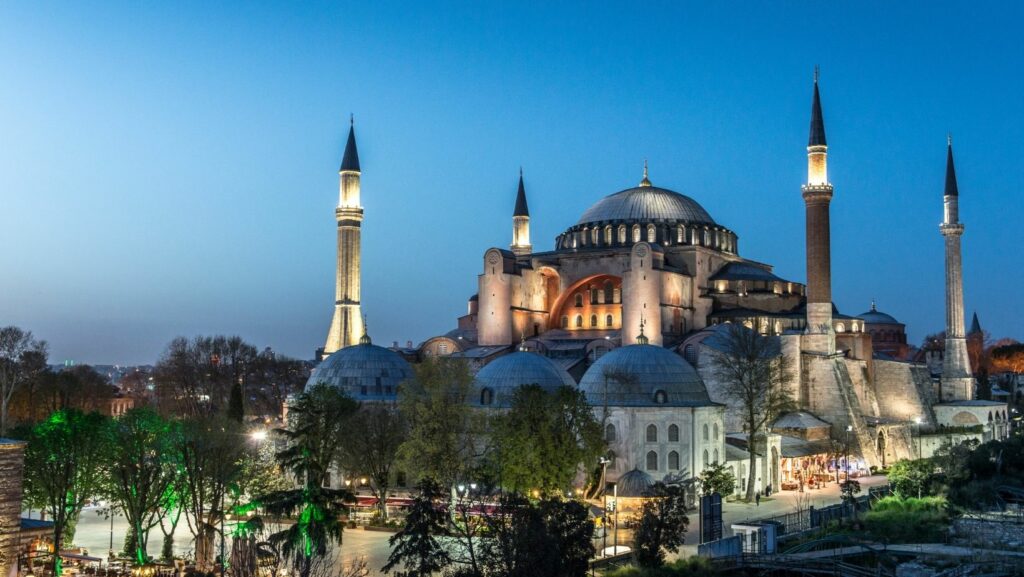
Istanbul is often reduced to an attractive montage: domes on the skyline, shimmering water, and a few celebrated streets that are easy to photograph and even easier to summarize. Yet the city’s real texture lives in places where people are not performing “Istanbul” for visitors. It’s in residential hillsides and narrow backstreets, in pragmatic shopping errands, and in routines so familiar that they rarely make it into travel narratives at all.
If you want a more analytical view of the city—one that explains how Istanbul functions rather than how it looks—pay attention to where people buy their vegetables, how they cross between districts, and what social codes govern everyday interaction. Even when modern life offers distractions like adventures beyond wonderland live casino, Istanbul’s most enduring appeal is still found in ordinary places where residents negotiate tradition, density, and change in real time.
Reading Istanbul Through Its Neighborhoods
Istanbul is not a single “center” with a few peripheral curiosities; it is a mosaic of districts that behave like semi-independent towns stitched together by water routes, steep roads, and public transit lines. Neighborhood identity here is not an aesthetic accessory—it is a practical framework. It shapes where you shop, which waterfront you walk on in the evening, and how you interpret the pace of the street.
A useful way to think about lesser-known neighborhoods is to see them as working systems rather than “hidden gems.” Some are repositories of memory, where religious and ethnic histories remain visible in architecture and street patterns. Others are laboratories of reinvention, where younger residents reuse older building stock and reshape local commerce. These forces—continuity and reinvention—coexist, and the seams between them are where you will learn the most.
Fener and Balat: Layers of Memory, Not Just Color
Along the Golden Horn, Fener and Balat are often described with cheerful adjectives: colorful, quaint, charming. Those labels are not wrong, but they are incomplete. The more revealing story is how these streets hold layered histories—communities that have shifted over centuries, buildings that have been repurposed, and a housing fabric that encourages slow, pedestrian movement. Historical accounts frequently note the area’s long-standing associations with Greek Orthodox and Jewish communities, among others, which helps explain why the neighborhood reads as unusually textured even at street level.
What makes Fener and Balat instructive is not only their past, but how that past is metabolized in the present. You can observe a local economy that oscillates between necessity and leisure: repair shops and small grocers beside cafés, workshops beside design-minded storefronts. The neighborhood becomes a live case study in urban change—how aesthetic appreciation can bring investment, and how investment can quietly pressure the very residents who produced the area’s everyday character in the first place.
Kuzguncuk and Üsküdar: The City’s “Village Logic” on the Asian Shore
On the Asian side, Kuzguncuk is frequently described as having a village-like atmosphere: quieter streets, a more intimate rhythm, and an emphasis on neighborhood familiarity. That feeling is not accidental. It comes from street scale, a relatively residential layout, and a social environment that rewards repeated encounters. Contemporary profiles still highlight Kuzguncuk’s layered community history and its enduring sense of calm within a vast metropolis.
Nearby Üsküdar illustrates another side of “beyond the postcards”: a waterfront that is less performative and more utilitarian. The shoreline is a transport corridor, a place for brisk walks, quick snacks, and commuting—activities that do not require spectacle to feel meaningful. In Üsküdar, you start to understand that the Bosphorus is not merely scenery; it is infrastructure. Ferries are not tours; they are timed decisions that structure daily life.
Yeldeğirmeni and Kadıköy: Creativity That Grows From Everyday Use
Kadıköy’s gravitational pull is partly commercial—food shopping, errands, meeting friends—yet it also supports a visible culture of street life and creativity. Yeldeğirmeni, in particular, is often associated with large-scale murals and a more alternative, arts-forward atmosphere, shaped in part by organized street art activity over the last decade-plus.
The key point is that this creativity is not separate from ordinary life; it rides on it. The same streets that host murals also host hardware stores, bakeries, and casual eateries. People are not visiting the area only to “see art”; they are living alongside it, which changes how public space behaves. Art becomes a layer within a functional neighborhood rather than an event that temporarily replaces it.
Local Markets as Social Infrastructure
To understand Istanbul, go where transactions are fast and opinions are candid: local markets. Markets are not just about price and freshness; they are civic spaces where the city rehearses its etiquette. You watch how shoppers negotiate, how vendors perform trustworthiness, and how strangers share micro-conversations that knit together a sense of belonging.
Feriköy’s organic market is a strong example because it formalizes a particular set of values—traceable produce, seasonal shopping, and direct purchase from sellers—while still operating as a pragmatic weekly routine. Listings of the market commonly note its Saturday schedule and its role as an important produce destination for residents.
Kadıköy’s market scene, by contrast, illustrates abundance and variety: seafood counters, produce stalls, and the broad, pragmatic shopping culture of a district that serves a wide residential catchment. Markets like these act as pressure valves in a dense city. They compress a week’s worth of household provisioning into a single, sociable outing.
Everyday Rituals: Tea, Bread, and the Commute as Ceremony
Istanbul’s rituals are not staged; they are iterative. The most instructive ones are anchored in repetition: tea poured in narrow-waisted glasses, quick breakfasts purchased on the move, and ferry commutes that turn necessity into a small interval of reflection. Tea culture, in particular, is widely described as a central form of hospitality and social glue, commonly brewed in a double teapot and served in tulip-shaped glasses that emphasize color and warmth.
Pair that with a simple street bread ring, eaten while walking or standing, and you have a portrait of Istanbul’s practical poetry: nourishment and movement, comfort without ceremony. Even contemporary reporting treats this bread as more than a snack—an emblem of daily life that crosses social classes and neighborhoods
Seen analytically, these rituals do important work. They soften the city’s friction—crowds, commutes, constant negotiation—by adding predictable moments of calm. They also democratize pleasure. You do not need a reservation, a ticket, or a curated “experience” to participate; you need only attention and the willingness to move at the city’s pace.
How to Visit Without Turning It Into a Checklist
“Beyond the postcards” is not a scavenger hunt for novelty. It is a way of observing how a city sustains itself. The practical approach is to choose one neighborhood per half-day and behave less like a collector and more like a temporary resident: take a ferry for its utility, shop at a market because you actually need something, pause for tea because the social rhythm invites it.
The reward is not just authenticity as a buzzword. It is comprehension. Istanbul becomes legible when you see how its districts specialize, how markets anchor neighborhood life, and how small rituals maintain social coherence. The postcards are still there, luminous and impressive. But once you understand the city’s everyday systems, you will realize the icons are only the surface of a much deeper, more intricate metropolis.